<strong>Core insight:</strong> Flight software is the mission—software in lunar landing missions is the real-time heart that sequences guidance, control...
NASA Software Engineering for Lunar Landing: Lessons from Apollo to Artemis
Core insight: Flight software is the mission—software in lunar landing missions is the real-time heart that sequences guidance, control, fault detection, and telemetry and must be verified to near-certainty because a single mis-timed interrupt or mis-specified state can cascade into loss of vehicle or crew.
Key Takeaways
- Flight software controls life-critical sequences and timing.
- Verification and redundancy reduce catastrophic risk.
- Hardware-in-the-loop testing is essential before flight.
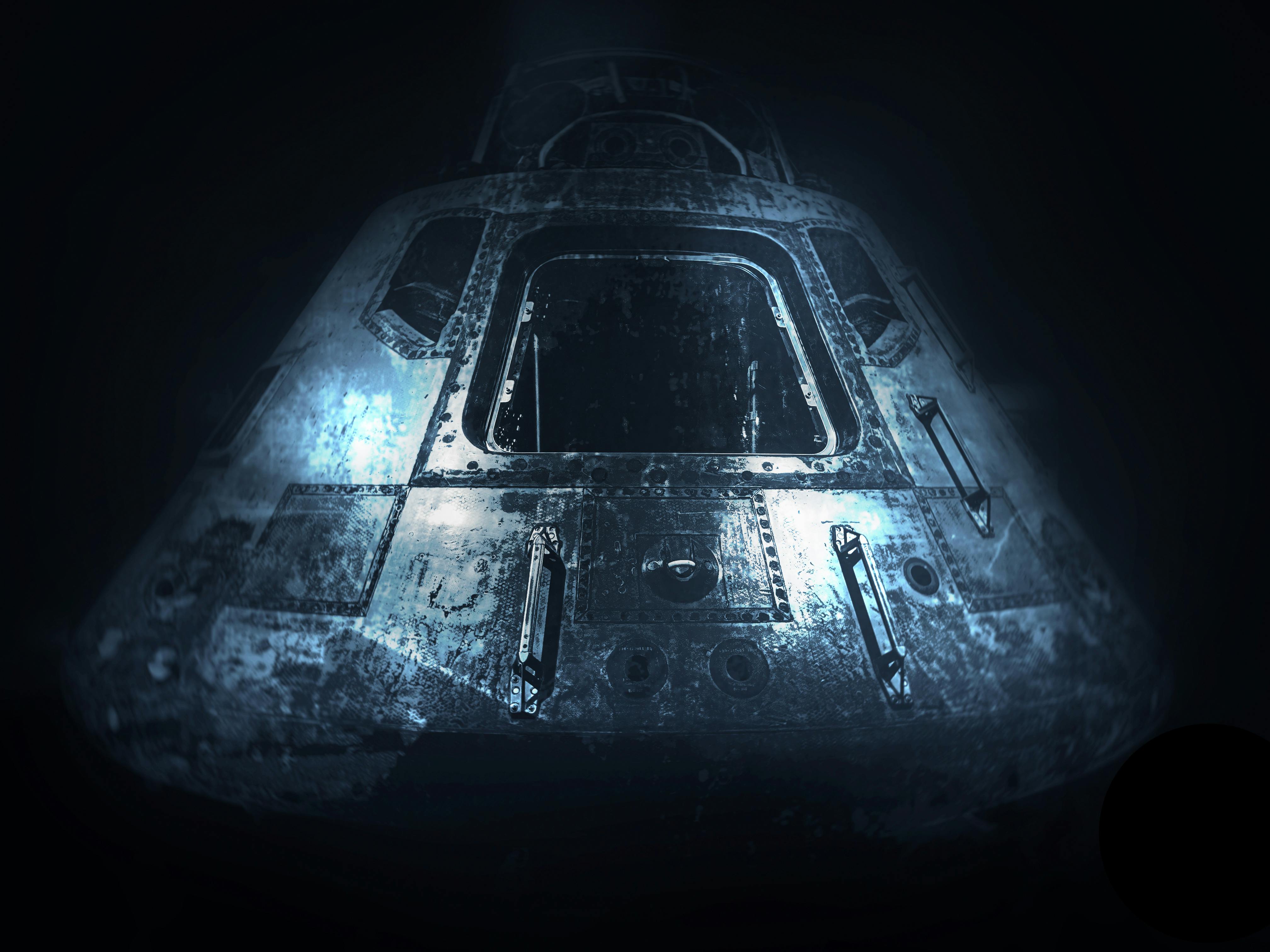
What is NASA software engineering?
Short sentence.
The field means designing, building, and validating **flight software** for spacecraft and related ground systems—this includes avionics stacks, real-time operating systems, guidance and control algorithms, telemetry protocols, and mission automation—and it requires exacting requirements, deterministic timing, and cross-disciplinary integration with hardware, optics, propulsion, and human operations. Clear.
Think big.
Short sentence.
When I worked on orbital systems at Google and later on satellite control demos, I learned that software in space is not a collection of lines but a set of contracts between components, each contract describing timing, failure modes, and observability, and those contracts must be negotiated with hardware teams, avionics vendors, and mission operations people early on because late changes cost months. True.
Pay attention.
Short sentence.
Key entities include the Apollo Guidance Computer, **real-time operating systems (RTOS)**, telemetry buses like **MIL-STD-1553**, fault-tolerant patterns such as **triple modular redundancy**, and verification practices including **static analysis**, formal methods, and system-level simulation—each element matters because spaceflight compresses margin and amplifies consequences. Indeed.
Remember.
Core Benefits/Importance
Short sentence.
At its core, **NASA software engineering** guarantees functional correctness under extremes, it keeps human crews alive, it allows precise maneuvering such as powered descent to the lunar surface, and it enables post-flight science by preserving telemetry fidelity for analysis, all while conforming to standards-driven assurance processes that link requirements to code and tests. Absolutely.
Worth it.
Short sentence.
In my first space-software integration job, we used hardware-in-the-loop rigs to catch a timing race that only showed up when a sensor lagged by 30 milliseconds under thermal load—catching that bug on the bench saved a simulated mission failure and forced us to add a timeout and graceful fallback, which later became a documented interface requirement and a proud example of stewardship of the system and its people. Frankly, those small acts of care are the dignity of work in engineering. Amen.
Lesson learned.
Short sentence.
Another benefit is repeatability: by using model-based design and automated test harnesses we create observable, repeatable artifacts that let teams prove behavior before launch, which shortens debug cycles and reduces human error on the console during critical events. Proven.
Do it.
Step-by-Step Implementation/Guide
Short sentence.
Step 1: Capture and lock **requirements** with testable acceptance criteria, including timing, fault behavior, and data rates—this ensures traceability from mission objective down to code and unit tests, and it makes certification possible when reviewers ask for proof. Start there.
Okay.
Short sentence.
Step 2: Use model-based design for guidance and control where behavior can be simulated with high fidelity, generate code for deterministic targets, and instrument the code with clear telemetry points so you can observe internal states during integration tests and flight simulations. Do this early.
Worthwhile.
Short sentence.
Step 3: Select an **RTOS** or runtime that supports priority scheduling, deterministic interrupts, and resource accounting; then apply static analysis tools, MISRA-like rules if applicable, and unit test frameworks that can run on the host and the target CPU to catch errors across the stack. No excuses.
Agree.
Short sentence.
Step 4: Build hardware-in-the-loop rigs and end-to-end simulation, including sensors, actuators, and closed-loop flight models, and run thousands of mission profiles to exercise corner cases, degraded sensors, and simultaneous faults so the system's fault detection and isolation logic proves itself before flight. Test thoroughly.
Essential.
Short sentence.
Step 5: Practice mission operations with flight-representative consoles, train crews on degraded modes, and define operator procedures for the worst plausible cases—this respects the dignity of the people who might rely on your code during a crisis and reflects a stewardship ethic toward both hardware and human life. Be responsible.
Do it.

Comparison Table
Short sentence.
Here is a straightforward comparison between **NASA-style software engineering** and an aggressive commercial approach that many know through high-profile companies; the table highlights priorities, assurance practices, and trade-offs so you can pick the right approach for your mission's risk tolerance and schedule. Use it as a checklist.
Clear.
| Feature | **NASA approach** | **Commercial competitor** |
|---|---:|---:|
|Primary goal|Safety and mission assurance|Rapid capability delivery|
|Development cadence|Planned, milestone-driven|Agile, iterative|
|Certification standards|Standards-heavy, traceability-centric|Internal standards, faster approval|
|Redundancy strategy|Conservative, full redundancy on critical paths|Selective redundancy by risk analysis|
|Use of formal methods|Applied on critical components|Selective and pragmatic|
|Telemetry design|High fidelity, detailed logging|Lean telemetry, targeted logs|
|Testing focus|Hardware-in-loop and system tests|More flight testing and small sats|
|Typical organizations|Large, distributed teams with domain leads|Cross-functional fast squads|
Common Mistakes to Avoid
Short sentence.
Rushing verification is the classic blunder—teams often feel schedule pressure and skip integration tests, which produces brittle systems that only fail in flight when stakes are highest, and I have seen that pressure cost months of rework and twice the budget because corrective fixes had to be requalified across interfaces. Beware.
Don't skip tests.
Short sentence.
Another mistake is under-investing in **telemetry and observability**—if your flight recorder misses internal state transitions or timing jitter, you cannot understand why a failure happened and you will repeat the same mistake; build observability early and accept modest mass and bandwidth costs for better post-flight analysis. Instrument everything.
No excuses.
Short sentence.
Treating software as isolated code rather than a system-of-systems is a frequent error—software interacts with sensors, actuators, thermal behavior, and operators, and ignoring those interactions leads to false confidence; I remember a launch rehearsal where a mis-specified data format between avionics and flight software required a hardware patch and delayed tests for weeks. Learn from that pain.
Fix it.
Short sentence.
Finally, ignoring human factors is a practical sin—operator procedures, alarm design, and console ergonomics matter because, in degraded modes, humans must interpret alerts and execute recovery steps, and humility before that reality is a form of stewardship of lives and resources. Design for people.
Respect work.
Frequently Asked Questions
Short sentence.
Q1: How did the Apollo software achieve reliability with tiny memory and compute resources? The Apollo Guidance Computer used priority scheduling, tight interrupt control, and compact, hand-verified code, and the team designed recovery modes and operator interventions into the procedures so hardware limits were managed through operational discipline and clever software design. Amazing.
Yes.
Short sentence.
Q2: Are formal methods required for flight software? Formal methods are not universally required, but they are highly valuable for the highest-assurance components such as guidance kernels and state machines, and we use them where a proof can replace thousands of tests; the choice depends on risk, schedule, and available expertise. Use them sensibly.
Consider it.
Short sentence.
Q3: How different is software for crewed vs. uncrewed missions? Crewed missions demand more conservative failure modes, richer telemetry for human decisions, and additional operator interfaces, while uncrewed missions might accept more autonomy and aggressive sharing of limited telemetry bandwidth to accomplish objectives. Plan accordingly.
Different.
Final Thought
Short sentence.
I have worked on large-scale distributed systems at several companies and later contributed to flight software projects, and my take is blunt: treat software as a moral responsibility because real people and costly hardware depend on it—this is a form of stewardship, and it reminds us that engineering is about serving the common good, not just shipping features. I write this as Ernie Castro because that ethic shaped my career and my approach to verification and testing. Amen.
Keep faith.
Short sentence.
If you build one thing today, make it observable, testable, and recoverable—build clear contracts, run closed-loop tests, and train the humans who will act when alarms ring, because those steps preserve value and life and reflect the dignity of work we owe to each other. Do the work right.
Act now.
Sources & further reading:
{
  "@context": "https://schema.org",
  "@type": "FAQPage",
  "mainEntity": [
    {
      "@type": "Question",
      "name": "How did the Apollo software achieve reliability with tiny memory and compute resources?",
      "acceptedAnswer": {
        "@type": "Answer",
        "text": "The Apollo Guidance Computer used priority scheduling, tight interrupt control, compact hand-verified code, and operator procedures designed for recovery modes to manage hardware limits through both software and operational discipline."
      }
    },
    {
      "@type": "Question",
      "name": "Are formal methods required for flight software?",
      "acceptedAnswer": {
        "@type": "Answer",
        "text": "Formal methods are valuable for highest-assurance components but are applied based on risk, schedule, and expertise; they can replace many tests when applicable."
      }
    },
    {
      "@type": "Question",
      "name": "How different is software for crewed versus uncrewed missions?",
      "acceptedAnswer": {
        "@type": "Answer",
        "text": "Crewed missions require more conservative failure modes, richer telemetry for human decision-making, and enhanced operator interfaces, while uncrewed missions often accept more autonomy and tighter telemetry budgets."
      }
    }
  ]
}