Is the QA Role Dead? What Software Testing Looks Like in the AI Era
Software testing checks whether an application behaves as intended, while quality assurance also builds the practices that help prevent defects. Neither discipline has disappeared. The work has shifted: developers own more tests, QA engineers build stronger quality systems, and AI-generated code makes thoughtful human review more important.
The old argument asks whether QA is dead or more important than ever. It misses the useful question: what work needs doing, and who is equipped to do it? In healthy engineering teams, testing is shared work, not a final checkpoint handed to one group after the code is finished.
I have seen teams save time by asking developers to test small changes as they make them, then involving quality specialists where broader product behavior or tricky edge cases need a sharper eye. That division works only when ownership is clear. A test nobody owns becomes a red light people learn to ignore.
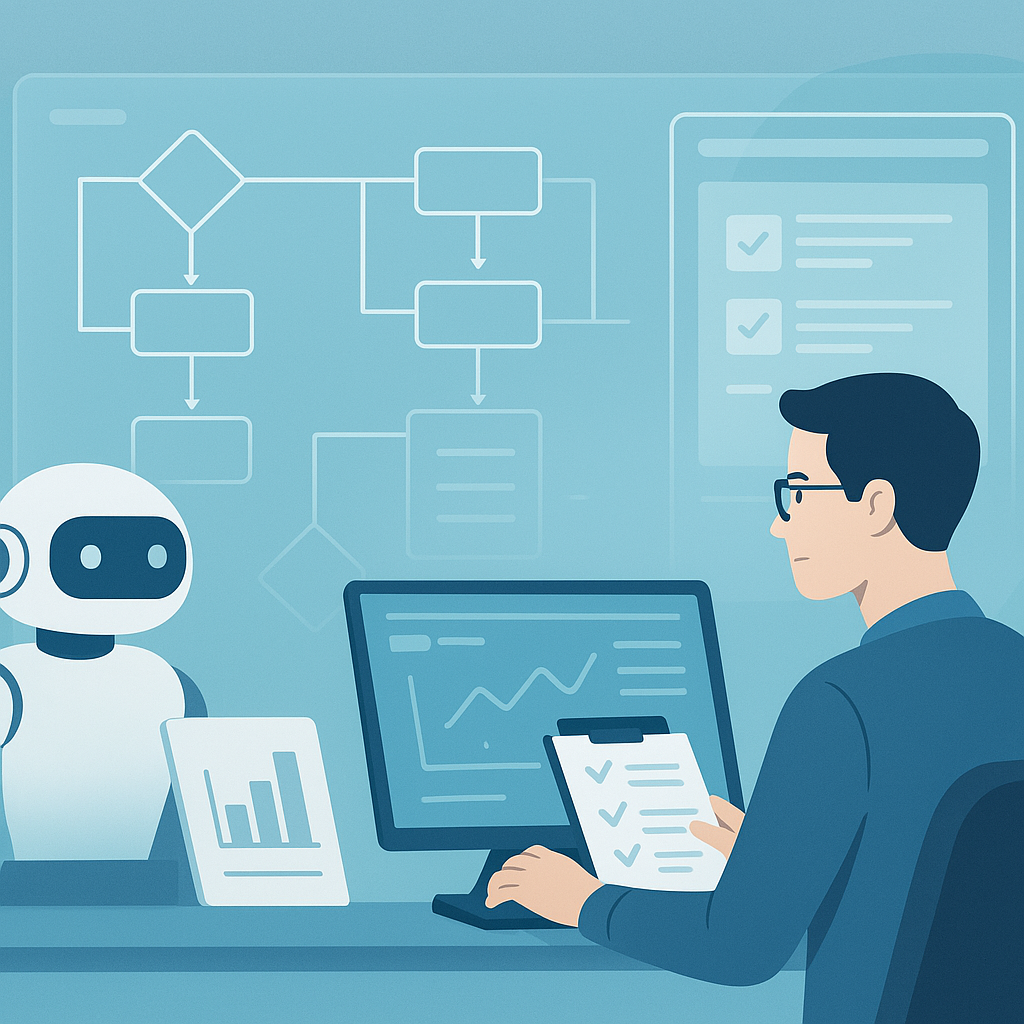
What Is the QA Role?
Software testing is the act of checking an application against expected behavior. A test might confirm that a form accepts a valid address, that a service returns the right result, or that a system remains responsive when many people use it at once. Tests can be automated or performed by a person. Their common purpose is to reveal a gap between what the software does and what people need it to do.
Quality assurance, often shortened to QA, is broader. It includes testing, but also asks how a team can prevent defects, find risk early, and make reliable work repeatable. That can mean defining test standards, improving a continuous integration pipeline, reviewing a release process, or helping a team decide what deserves careful human attention. The terms overlap in ordinary job titles, so the duties matter more than the label.
Testing usually happens at several levels. Unit tests check a small function or component, often in isolation. Integration tests check whether connected parts work together. End-to-end tests follow a complete user workflow through an application. Regression tests rerun checks after changes to catch old behavior that has broken. Performance and load tests examine speed and stability under expected or heavy traffic. Exploratory testing gives a person room to probe unusual paths that a scripted test may miss.
A practical test strategy does not treat every test as equal. The test pyramid described by Martin Fowler’s article on the test pyramid is a useful guide: favor many fast, focused checks, then use fewer broad tests that take longer and cost more to maintain. It is a guide, not a commandment. The right balance depends on the product and the risks users face.
I once watched a team struggle with a long, brittle end-to-end suite that failed often for reasons unrelated to real defects. The useful change was not to add more checks. It was to move simple assertions closer to the code, stabilize the essential user flows, and let testers investigate behavior the suite could not judge. That is the modern QA role in a nutshell: make quality work effective, not merely visible.
Why Quality Engineering Matters
Quality work protects users and helps teams make changes with less guesswork. It is not a paperwork tax. When checks catch a problem close to the code change that caused it, a developer can often fix it before the defect spreads across services or reaches customers. The longer a defect hides, the more surrounding work may depend on it.
The practical benefits are clear:
- Earlier feedback: Fast unit and integration tests give developers a quick signal while the code is still fresh in their minds.
- Safer changes: Regression tests check that useful behavior remains intact as a product grows.
- More reliable releases: A repeatable CI pipeline can run the same core checks on every proposed change, instead of relying on memory or a last-minute checklist.
- Better use of specialist time: QA engineers can focus on test infrastructure, complex workflows, usability, and risks that need human judgment.
- Clearer priorities: A risk-based strategy helps teams spend effort on areas where failure would harm users, interrupt service, or expose sensitive information.
Here is the kicker: testing can also speed up delivery. That sounds backwards to teams that treat testing as a delay, but quick, dependable checks reduce the time people spend chasing regressions after a release. Microsoft’s guidance on shifting testing left explains the value of making tests fast and reliable earlier in development. The point is not to test everything at once. It is to get useful feedback before a small problem grows legs.
I have seen a team hit a recurring defect in a payment workflow. The first response was to add a release checklist. That helped a little, but the durable fix came when the team added a focused automated check and made the failure easy to diagnose. The checklist had depended on people remembering. The test became part of the work itself.
There is a human reason to care, too. People rely on software to manage money, access services, communicate, and do their jobs. Quality is a form of stewardship: teams have a responsibility to treat users’ time, privacy, and trust with care. A fast release is not a good release if it shifts preventable harm onto the people using the product.
How to Build a Modern Testing Practice
Start with risk, not a tool purchase. A flashy test platform cannot decide which failures matter to your users. These steps give a team a usable foundation.
- Write down important user behavior. List the tasks people must be able to complete, such as signing in, saving a record, or receiving a confirmation. Include what should happen when information is missing or a service is unavailable. I have found a short, shared list more useful than a giant test plan that nobody keeps current.
- Match tests to the right level. Check small rules with unit tests, connections between components with integration tests, and a few critical user flows with end-to-end tests. If a test can be made reliable and fast without launching the whole product, that is usually a better place to start. Google’s Site Reliability Engineering guidance on testing is a useful reference for treating tests as part of reliability work.
- Assign clear ownership. The developer changing a function should usually add or update its unit tests. A QA or test engineer can own shared test infrastructure, coach teams on coverage, and help select the right checks for system-level risk. Ownership can be shared, but it should never be vague. If a test fails, someone needs to know who investigates it.
- Put dependable checks in CI. Run quick tests on each proposed change, then reserve slower suites for suitable pipeline stages or scheduled runs. Keep failures readable. A pipeline that reports only a wall of logs teaches people to click past the warning. I have seen teams regain trust in CI simply by separating product failures from flaky test infrastructure and showing the failing behavior clearly.
- Add human exploration where scripts fall short. Ask a tester to probe confusing flows, unusual input, accessibility, and behavior that crosses several screens or services. Exploratory testing is not random clicking. A tester can set a goal, record observations, and use each result to improve future coverage. This is especially valuable when product requirements leave room for judgment.
- Review results and maintain the suite. Track recurring failures, slow checks, and tests that often fail without a product defect. Remove checks that no longer protect important behavior. When a bug reaches users, ask which layer could have caught it and whether adding a test would prevent a repeat. A healthy suite changes as the product changes.
AI tools can help along the way. An assistant may draft a test from nearby code or suggest cases a developer did not think of. Treat that output as a first draft, not evidence that a feature works. Review the assertions, run the test, and check that it would fail if the behavior were wrong. The GitHub Copilot guidance on responsible use likewise advises people to review and test generated code rather than accept it blindly.
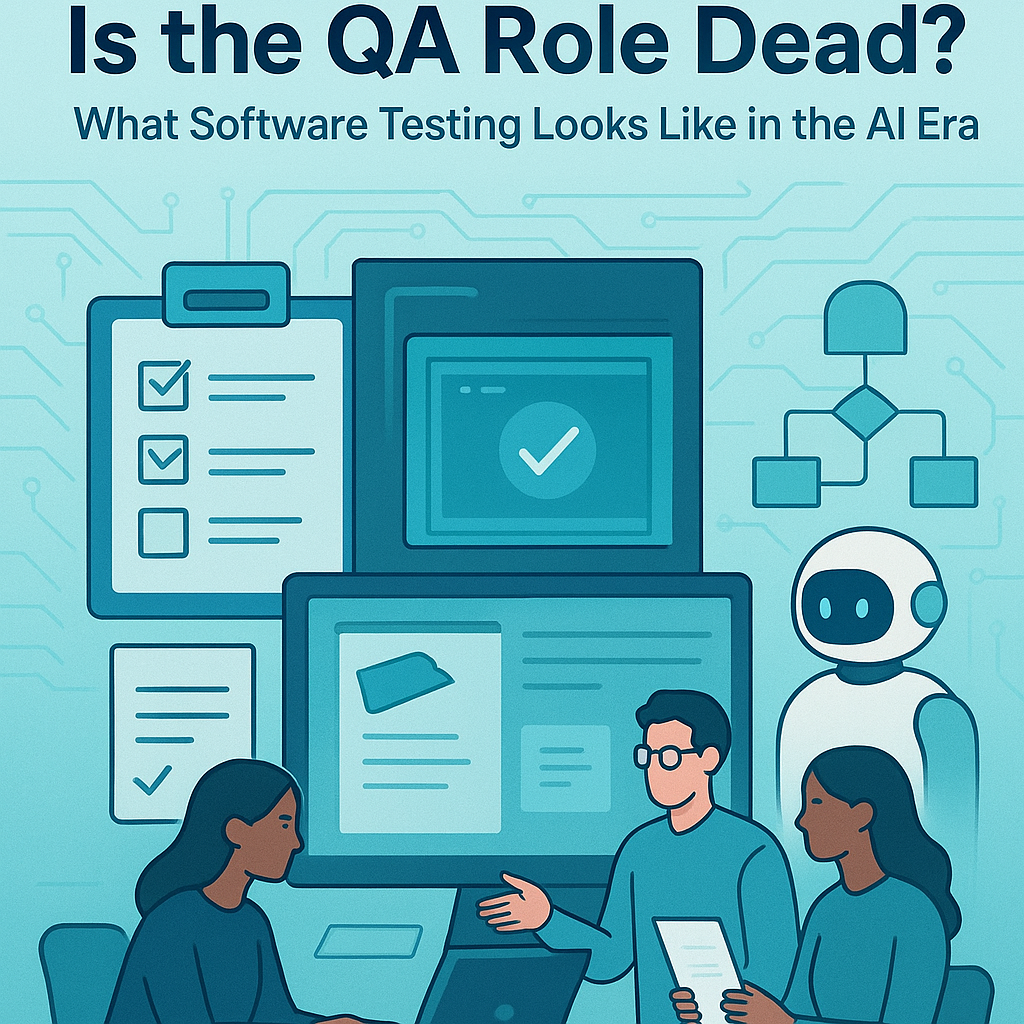
Traditional QA and Modern Quality Engineering Compared
The older model often placed a separate testing phase after development. A specialist group received a finished build, executed test cases, and reported defects before release. That arrangement could catch real problems, especially where teams had little automation or where regulated work required careful evidence. Its weakness was the handoff: defects might be found late, and developers might treat quality as someone else’s job.
Modern quality engineering spreads routine checks across the development process. Developers test their changes, automated suites run in CI, and QA specialists focus on the system around those checks: coverage, reliability, exploratory work, and risk. This does not make dedicated QA roles pointless. It changes the work toward preventing repeat failures and making quality practices scale.
| Area | Traditional QA model | Modern quality engineering |
|---|
| Main timing | Testing often follows development | Checks start during development and continue through delivery |
| Common owner | Separate QA group executes many cases | Developers own code-level tests; QA specialists guide broader quality work |
| Common focus | Manual scripts and release sign-off | Automation, risk, test infrastructure, and exploratory testing |
| Feedback | Can arrive late in the release cycle | Fast checks can report problems on each change |
| AI use | Limited or separate from the test process | AI may draft tests or group failures, with human review |
| Main risk | Late discovery and handoff gaps | Weak tests, flaky automation, or unclear shared ownership |
These are patterns, not strict categories. A small team may have no dedicated QA title and still do careful quality work. A large organization may retain manual testing for high-risk workflows while automating routine checks. The test pyramid remains a helpful way to think about test cost and scope, but a team should adjust it to fit its architecture and users.
I do not see these models as rivals. The useful comparison is between a quality process that waits for someone else and one where people take responsibility at the right point. A tester who spots a confusing workflow is doing work automation cannot replace. A developer who adds a reliable unit test is preventing a defect from returning. Both are quality work.
Common Testing Mistakes to Avoid
More tests do not automatically mean better quality. A suite can be large, slow, flaky, and still miss the failures users care about. Here are common traps I have seen teams fall into.
- Treating test count as a score. A thousand shallow assertions may give less protection than a small set of checks tied to real user needs. Ask what failure each test would catch, and whether it would fail for the right reason.
- Putting every check at the end-to-end level. Full workflows are valuable, but they take longer to run and can break when a harmless interface detail changes. Keep them for critical paths, then test smaller rules closer to the code. Fowler’s test-pyramid discussion is useful background, but copy-and-pasting any model without understanding your system is a mistake.
- Calling a test flaky and leaving it flaky. When the same code sometimes passes and sometimes fails, people stop trusting the signal. Find the cause, isolate the test, or remove it until it can be made dependable. A red build that everyone ignores is worse than no useful signal at all.
- Making QA responsible for all quality. Specialists can set direction and improve tools, but they cannot inspect every change or predict every user’s behavior. Developers still need to write and review tests. Product teams need to state what matters. Managers need to give people time to do the work.
- Accepting AI-generated tests without inspection. Generated code can look polished while checking the wrong result, repeating an existing test, or missing important edge cases. I review whether the test expresses the product requirement, whether its assertions are meaningful, and whether it catches a deliberately introduced failure. A green check alone proves very little.
- Mistaking coverage for correctness. Coverage tells you which code ran during tests; it does not prove that the tests checked the right outcome. Use it as a clue, not a finish line. Test the important behavior and the consequences of failure.
Most guides say to automate repetitive work. Fair enough. But a poorly designed test can automate confusion at high speed. Keep a person accountable for test meaning, failure triage, and the choice to release. That is not distrust of tools; it is responsible engineering.
Frequently Asked Questions
Is the QA role going away?
No. The work is changing, but teams still need people who can assess product risk, improve testing systems, build useful automation, and explore behavior that scripts miss. Some companies may have fewer roles focused only on running manual cases. That is different from saying quality work has vanished. Job titles vary, so read the duties carefully.
Should developers write their own tests?
Usually, yes. Developers are close to the code and can add focused unit and integration tests while making a change. That does not mean developers should test alone or that every case belongs in code. QA specialists can strengthen strategy, tooling, and system-level coverage, while product and design partners help clarify expected behavior.
Can AI replace manual software testing?
Not by itself. AI can draft test scripts, suggest likely cases, or help group similar failures. People still need to check the output, decide whether a result is harmful, and investigate usability or unexpected behavior. For AI features whose output can vary, teams may need repeatable evaluation sets, acceptable ranges, and human review rather than one exact expected sentence.
What should a small team automate first?
Begin with checks that run often, protect important behavior, and are easy to keep reliable. That often means unit tests for core rules, integration tests for important connections, and a few end-to-end tests for essential user tasks. Leave room for exploratory testing. Avoid buying complex tools before you understand which risks need attention.
Final Thought
The best argument for QA is not that a title must be preserved. It is that reliable software takes deliberate work, and somebody must make sure that work happens. When teams spread responsibility sensibly, developers catch small mistakes close to the code, specialists strengthen the testing system, and people who understand users examine the behavior scripts cannot judge.
AI changes the pace and texture of the work. It can produce code and test drafts quickly, which means teams may face more changes and more output to review. Speed is useful only when paired with judgment. A generated test that checks the wrong thing is not coverage; it is noise with a green badge.
I have learned to trust a modest, clear test more than an impressive dashboard full of numbers nobody can explain. Start with user needs, identify the harm a failure could cause, and make each check earn its place. Keep the work humane, too: the purpose is not to satisfy a pipeline but to serve the people who depend on the software. Quality is shared responsibility, and shared responsibility needs named owners, honest feedback, and time to do the job well.