AI is not just a tool. It is a power move.
AI, Work, and Power: What Cory Doctorow Gets Right About Control, Jobs, and the Real Cost of Automation
AI is not just a tool. It is a power move.
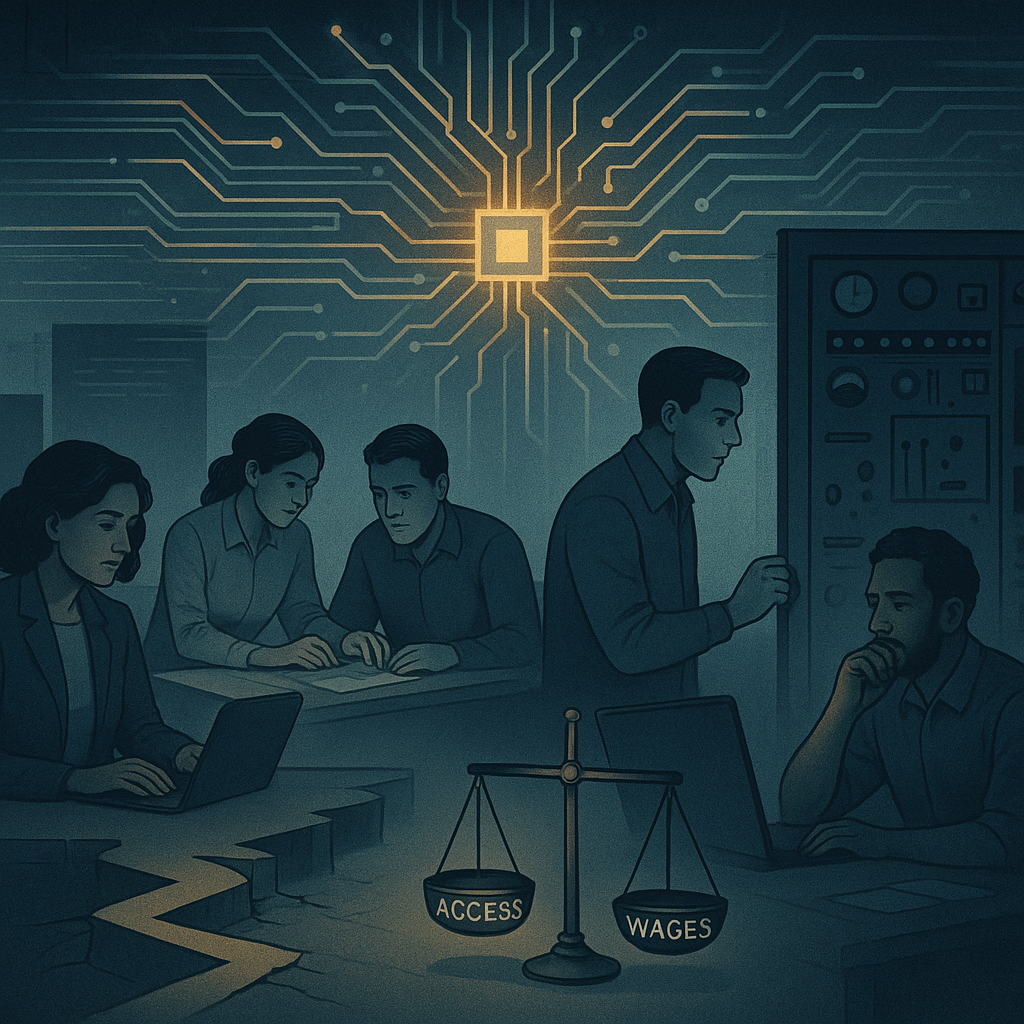
When Cory Doctorow talks about AI, work, and power, the real issue is not whether the code can write a memo or make a pretty picture. The issue is who gets to decide how work changes, who keeps the gains, and who eats the pain. I have seen this pattern before, from Google to Microsoft to Amazon to Zulily, and it rarely ends with workers getting a fair shake. I’m Ermenildo V Castro, and that part is plain enough.
Key Takeaways- AI changes work fast, but power changes slow unless people force it.
- Most bosses talk about efficiency, but what they often mean is fewer people and more pressure.
- Good AI use should save time, improve quality, and respect human dignity.
- Bad AI use strips away judgment, weakens jobs, and puts blame on workers.
- The best results come when teams set rules, review outputs, and keep humans in charge.
What is AI, Work, and Power?
It is a simple idea with sharp edges.
AI, work, and power means looking at artificial intelligence not as magic software, but as a force that changes labor, control, pay, and who gets heard. That matters because most tech talk skips the ugly part. It talks about speed, cost, and “scale,” but not about the people who lose room to think, fix mistakes, or push back.
I have lived through enough tech waves to know how this goes. At one company, a new system was sold as help, but the real plan was tighter control over workers and less slack in the process. At another, the pitch was “remove drudge work,” but the result was more monitoring and less trust. Sound familiar? That is because the machine is usually not the problem. The management decision is.
AI can help when it is used as a helper. It can sort data, draft text, catch bugs, and speed up boring tasks. But when it is used to squeeze labor, it becomes a blunt tool. Then the worker is told to do more with less, while the company keeps the upside. That is not innovation. That is just dressed-up pressure.
Here is the kicker. The moral question is not “Can AI do this?” The real question is “Should AI do this here, in this way, and at whose expense?” That question fits a Catholic view of stewardship and human dignity. Work is not trash to be thrown away. People are not parts in a box.
For a solid legal and policy view, I often point people to NBER’s research on generative AI and labor, the International Labour Organization, and OECD AI policy work. Those sources do not cheerlead. Good. We need less cheering and more facts.
Core Benefits/Importance
AI can help work. It really can.
That said, the gains only matter if they are shared, and if the output is checked by a human who knows the job, because sloppy automation has a way of turning a small mistake into a big mess. You want speed, sure, but you also want fairness, trust, and a system that does not chew up people just to shave a few minutes off a report.
- Saves time on dull tasks: Drafting notes, sorting tickets, and summarizing long text can free workers for real judgment. I have used this kind of help on engineering work, and it is fine when it stays in its lane.
- Finds patterns faster: AI can spot trends in logs, sales data, or support messages that a person might miss. That said, pattern spotting is not wisdom. Not even close.
- Improves first drafts: A rough draft is not the final word, but it can get a team unstuck. I have seen teams move faster when they stop pretending blank pages are holy.
- Supports smaller teams: For lean teams, AI can cover gaps, especially in early research, documentation, and testing. This matters when budgets are tight and the work still has to get done.
- Can improve access: Tools for speech-to-text, translation, and reading help can make work more usable for more people. That fits the common good. Simple as that.
- Can cut busywork: If used well, AI can trim copy-paste drudgery and bad manual sorting. Nobody misses that stuff.
I still remember a rollout at a big company where the tool was supposed to reduce toil. Instead, it added review steps because the model was shaky and nobody trusted it. So what happened? People did the tool’s work and their own work, which is a lovely little scam if you can call it that.
That is why the importance of AI is not just output. It is control. Who owns the model, who can inspect it, who can say no, and who gets protected when it fails? Those are the questions that matter more than fancy demos.
If you want more context on work and tech change, see my take on how AI changes software engineering work, remote work and team trust, and AI coding assistants. Different topic, same lesson: tools are only as decent as the people steering them.
Step-by-Step Implementation/Guide
Use AI with rules.
That sounds dull, and maybe it is, but dull beats chaos, because most failures come from teams treating AI like a magic oracle instead of a noisy assistant that needs boundaries, test cases, and adults in the room. Here is how I would do it after years of seeing both good rollouts and stupid ones.
- Pick one narrow task
Start small. Use AI for drafting, summarizing, classifying, or searching, not for making final decisions on pay, hiring, discipline, or layoffs. Why? Because those choices shape lives, and we should not hand them to a probabilistic machine and hope for the best. - Define the human owner
Every AI output needs a named person who checks it. No ghost ownership. No “the system said so.” That dodge is lazy, and it kills accountability. - Write simple rules
Say what the tool can do, what it cannot do, and when it must stop. I have seen teams skip this step, and then they act shocked when the model starts making confident nonsense. - Test with real work
Use real tickets, real docs, and real edge cases. Lab demos are pretty, but production data is the judge that matters. If the tool fails on the messy stuff, it is not ready. - Track errors and time saved
Do not just count wins. Count mistakes, rework, and time lost. A tool that saves five minutes but creates thirty minutes of cleanup is not a win. That math is not hard. - Review for bias and harm
Ask who gets helped and who gets hurt. This is where justice matters. A fair system does not hide behind averages when the damage lands on a few people every day. - Keep an exit plan
If the tool misbehaves, kill it or shrink it. I have watched too many teams keep broken systems alive because they already sold the story to leadership. Pride is expensive. - Update the rules often
Models change, people change, and work changes. Review the setup every few months. Otherwise the policy becomes wallpaper.
One more thing. Do not let AI be the excuse for bad management. If a team is already underpaid, overworked, and ignored, adding AI will not fix the rot. It may just hide it for a while.
For practical guidance on safe deployment, the NIST AI Risk Management Framework is worth reading, and so is Google’s responsible AI guidance. I do not agree with every line in every corporate doc, but the habit of measuring risk is better than winging it.

Comparison Table
Let’s compare the usual AI pitch with the real thing.
| Topic | AI used with worker control | Biggest competitor: AI used for pure cost cutting |
|---|
| Main goal | Better work, safer output, less drudge | Fewer workers, tighter control, higher margins |
| Human role | Human reviews, decides, and owns results | Human becomes cleanup crew |
| Error handling | Measured, tracked, and fixed | Hidden until customers complain |
| Trust level | Higher, because people can inspect it | Lower, because nobody trusts black-box output |
| Skill growth | Workers learn faster and keep judgment | Workers lose practice and become button-pushers |
| Moral shape | Respects dignity of work | Treats labor like waste to trim |
| Long-term result | Better systems and steadier teams | Burnout, churn, and shallow gains |
The table is blunt because reality is blunt.
Most companies do not fail because AI is weak. They fail because they use it to squeeze people instead of making work better. That old trick is as stale as week-old bread. If leadership wants real gains, it should ask whether the tool improves the craft, not just the spreadsheet.
Common Mistakes to Avoid
People make a mess of this.
The biggest mistake is pretending AI is neutral. It is not neutral in effect, because it reflects the data, the setup, and the incentives wrapped around it, and those incentives often lean hard toward speed over truth, which is why so many glossy plans end in awkward cleanup.
- Using AI for final judgment: Do not let a model make final calls on hiring, firing, medical care, pay, or discipline. That is morally sloppy and often legally risky.
- Skipping human review: Teams love to say “the model is good enough.” That phrase has launched many bad incidents. Good enough is not enough when the cost lands on people.
- Ignoring worker input: The people doing the work know where the pain is. If you skip them, the system will bite you later. Guaranteed.
- Chasing hype over fit: Not every job needs AI. Some tasks need a better checklist, better staffing, or a simpler tool.
- Hiding the tradeoffs: If AI saves time but increases stress, say so. If it reduces mistakes but adds surveillance, say that too. Honest tradeoffs beat shiny nonsense.
- Treating outputs as truth: AI can be wrong with great confidence. That confidence is not wisdom. It is just a smooth voice on a shaky base.
- Failing to update policies: Old rules rot fast. If no one revisits them, they become a joke.
I have seen leaders talk as if automation were a moral good by itself. I do not buy that. Tech is a tool, not a saint. It should serve people, not replace responsibility. That is basic stewardship.
Here’s what nobody tells you. A lot of AI pain comes from cowardice, not code. Managers know a system is shaky, but they launch it anyway because the roadmap looks nice. Then they act surprised when workers lose trust. Please. Spare me.
For wider context on labor and machine systems, see the ILO’s Future of Work resources and the World Economic Forum’s Future of Jobs Report. Read them with a pinch of salt, but read them.
Frequently Asked Questions
Is AI really taking jobs, or just changing them?
Both.
Some roles shrink, some change shape, and some grow, but the pattern depends on who sets the rules, how fast the change lands, and whether workers get training, time, and a say in the process. If leaders use AI well, jobs change. If they use it badly, jobs disappear and the work gets uglier.
Should companies replace people with AI?
Usually no.
A company should first ask what work is being done, whether the task is repetitive, and whether a person still needs judgment, care, or accountability, because once you remove the person from the loop, mistakes get harder to catch and easier to hide.
What work is safest from AI?
Work that needs care, taste, trust, and judgment.
Anything involving human pain, legal risk, moral choice, or deep context is poor ground for full automation. AI can help prepare the work, but it should not own the final call.
How can workers protect themselves?
Learn the tool, ask for clear rules, and keep records.
I also tell people to keep growing their judgment, because the better you understand the work, the less likely you are to be pushed aside by cheap automation that only looks smart from a distance.
Final Thought
This is about people.
AI, work, and power is not a side issue for engineers or managers; it is a test of what kind of company, and what kind of society, we are willing to build, because every system says something about the value we place on labor, truth, and the weak spots we owe care to. I have seen enough boardroom talk to know that shiny tools can hide plain greed. I have also seen good teams use software with restraint, clarity, and respect.
That is the line worth holding. Not fear, and not worship. Just honest work, honest rules, and a fair share of the gain.
If I have learned anything from years in tech, from Google to Microsoft to Amazon and beyond, it is that tools reflect the hands that use them. Ermenildo V Castro would say the same thing in plainer words: if your AI plan makes life harder for the people doing the work, then the plan is crooked. Fix that first.